All Categories
Featured

Defending Your Legal Rights Against Harassment in 2026
Table of Contents
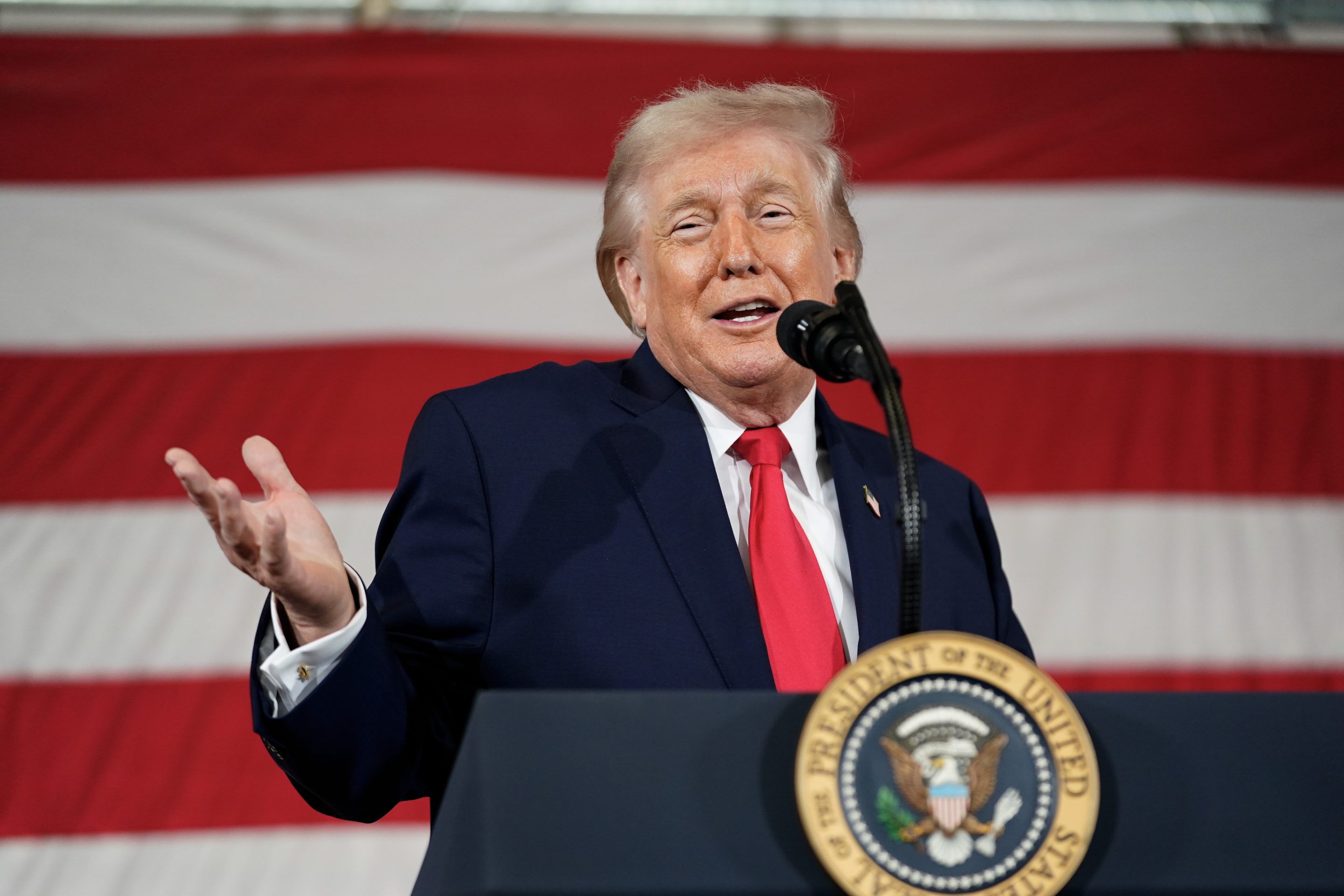
Capstone believes the Trump administration is intent on taking apart the Customer Financial Security Bureau (CFPB), even as the agencyconstrained by limited budget plans and staffingmoves forward with a broad deregulatory rulemaking agenda beneficial to industry. As federal enforcement and supervision decline, we expect well-resourced, Democratic-led states to step in, developing a fragmented and irregular regulatory landscape.

While the supreme outcome of the litigation remains unknown, it is clear that consumer finance companies across the ecosystem will gain from minimized federal enforcement and supervisory dangers as the administration starves the agency of resources and appears devoted to decreasing the bureau to an agency on paper just. Considering That Russell Vought was called acting director of the company, the bureau has faced litigation challenging numerous administrative choices meant to shutter it.
Vought also cancelled various mission-critical contracts, issued stop-work orders, and closed CFPB workplaces, to name a few actions. The CFPB chapter of the National Treasury Worker Union (NTEU) immediately challenged the actions. After evidentiary hearings, Judge Amy Berman Jackson of the US District Court for the District of Columbia provided an initial injunction stopping briefly the decreases in force (RIFs) and other actions, holding that the CFPB was attempting to render itself functionally unusable.
Evaluating Debt Management Versus Bankruptcy for 2026
DOJ and CFPB lawyers acknowledged that eliminating the bureau would need an act of Congress which the CFPB stayed accountable for performing its statutorily required functions under the Dodd-Frank Wall Street Reform and Consumer Defense Act. On August 15, 2025, the DC Circuit provided a 2-1 choice in favor of the CFPB, partially abandoning Judge Berman Jackson's preliminary injunction that blocked the bureau from executing mass RIFs, but staying the choice pending appeal.
En banc hearings are seldom granted, however we anticipate NTEU's demand to be authorized in this instance, provided the in-depth district court record, Judge Cornelia Pillard's prolonged dissent on appeal, and more recent actions that signal the Trump administration means to functionally close the CFPB. In addition to prosecuting the RIFs and other administrative actions focused on closing the agency, the Trump administration aims to develop off budget cuts included into the reconciliation bill passed in July to even more starve the CFPB of resources.
Dodd-Frank insulates the CFPB from direct appropriations by Congress, instead licensing it to request funding directly from the Federal Reserve, with the amount topped at a portion of the Fed's operating costs, based on a yearly inflation change. The bureau's capability to bypass Congress has actually frequently stirred criticism from congressional Republicans, and, in the spirit of that ire, the reconciliation bundle passed in July reduced the CFPB's funding from 12% of the Fed's operating costs to 6.5%.
Comprehending the Fair Debt Collection Practices Act in 2026
In CFPB v. Neighborhood Financial Services Association of America, accuseds argued the financing approach violated the Appropriations Provision of the Constitution. While the Fifth Circuit agreed, the United States Supreme Court did not. In a 7-2 decision in May 2024, Justice Clarence Thomas' bulk viewpoint held the CFPB's financing method constitutional. The Trump administration makes the technical legal argument that the CFPB can not lawfully demand funding from the Federal Reserve unless the Fed pays.
The technical legal argument was submitted in November in the NTEU lawsuits. The CFPB stated it would lack cash in early 2026 and might not legally demand financing from the Fed, citing a memorandum opinion from the DOJ's Workplace of Legal Counsel (OLC). Utilizing the arguments made by defendants in other CFPB litigation, the OLC's memorandum opinion analyzes the Dodd-Frank law, which allows the CFPB to draw funding from the "combined revenues" of the Federal Reserve, to argue that "incomes" indicate "profit" rather than "earnings." As an outcome, since the Fed has been performing at a loss, it does not have "combined incomes" from which the CFPB might lawfully draw funds.
Knowing Your Legal Rights From Harassment in 2026
Accordingly, in early December, the CFPB acted on its filing by corresponding to Trump and Congress saying that the company required approximately $280 million to continue performing its statutorily mandated functions. In our view, the new however recurring financing argument will likely be folded into the NTEU lawsuits.
A lot of consumer finance business; home mortgage loan providers and servicers; auto lending institutions and servicers; fintechs; smaller sized consumer reporting, financial obligation collection, remittance, and automobile financing companiesN/A We expect the CFPB to press aggressively to carry out an enthusiastic deregulatory agenda in 2026, in tension with the Trump administration's effort to starve the company of resources.
In September 2025, the CFPB published its Spring 2025 Regulatory Program, with 24 rulemakings. The agenda follows the company's rescission of nearly 70 interpretive rules, policy declarations, circulars, and advisory opinions going back to the firm's inception. The bureau launched its 2025 supervision and enforcement priorities memorandum, which highlighted a shift in guidance back to depository organizations and home loan loan providers, an increased focus on locations such as fraud, assistance for veterans and service members, and a narrower enforcement posture.
Why File for Bankruptcy in 2026?
We see the proposed rule changes as broadly beneficial to both customer and small-business lenders, as they narrow prospective liability and direct exposure to fair-lending scrutiny. Particularly relative to the Rohit Chopra-led CFPB during the Biden administration, we anticipate fair-lending supervision and enforcement to practically vanish in 2026. A proposed guideline to narrow Equal Credit Chance Act (ECOA) regulations intends to eliminate diverse impact claims and to narrow the scope of the frustration arrangement that forbids lenders from making oral or written statements intended to prevent a consumer from applying for credit.
The new proposal, which reporting recommends will be completed on an interim basis no behind early 2026, drastically narrows the Biden-era rule to omit particular small-dollar loans from coverage, decreases the limit for what is thought about a small company, and removes numerous data fields. The CFPB appears set to provide an updated open banking guideline in early 2026, with substantial implications for banks and other traditional banks, fintechs, and information aggregators across the consumer finance environment.
The rule was finalized in March 2024 and consisted of tiered compliance dates based on the size of the monetary institution, with the biggest required to start compliance in April 2026. The last rule was right away challenged in May 2024 by bank trade associations, which argued that the CFPB surpassed its statutory authority in issuing the guideline, specifically targeting the restriction on fees as unlawful.
Achieving Financial Success From Debt in 2026
The court released a stay as CFPB reassessed the rule. In our view, the Vought-led bureau might think about allowing a "affordable charge" or a comparable requirement to enable information companies (e.g., banks) to recover costs associated with supplying the information while also narrowing the danger that fintechs and information aggregators are priced out of the marketplace.
We expect the CFPB to significantly reduce its supervisory reach in 2026 by completing four bigger participant (LP) guidelines that establish CFPB supervisory jurisdiction over non-bank covered individuals in various end markets. The changes will benefit smaller sized operators in the customer reporting, auto finance, consumer financial obligation collection, and global money transfers markets.

Latest Posts

Protecting Your Consumer Rights Against Collectors in 2026
How to Manage Personal Insolvency Safely

Latest Federal Debt Relief Resources in 2026